
Ankh Beauty Journal
Clay Mask vs. AHA Peeling Concentrate: Compare Ankh Beauty
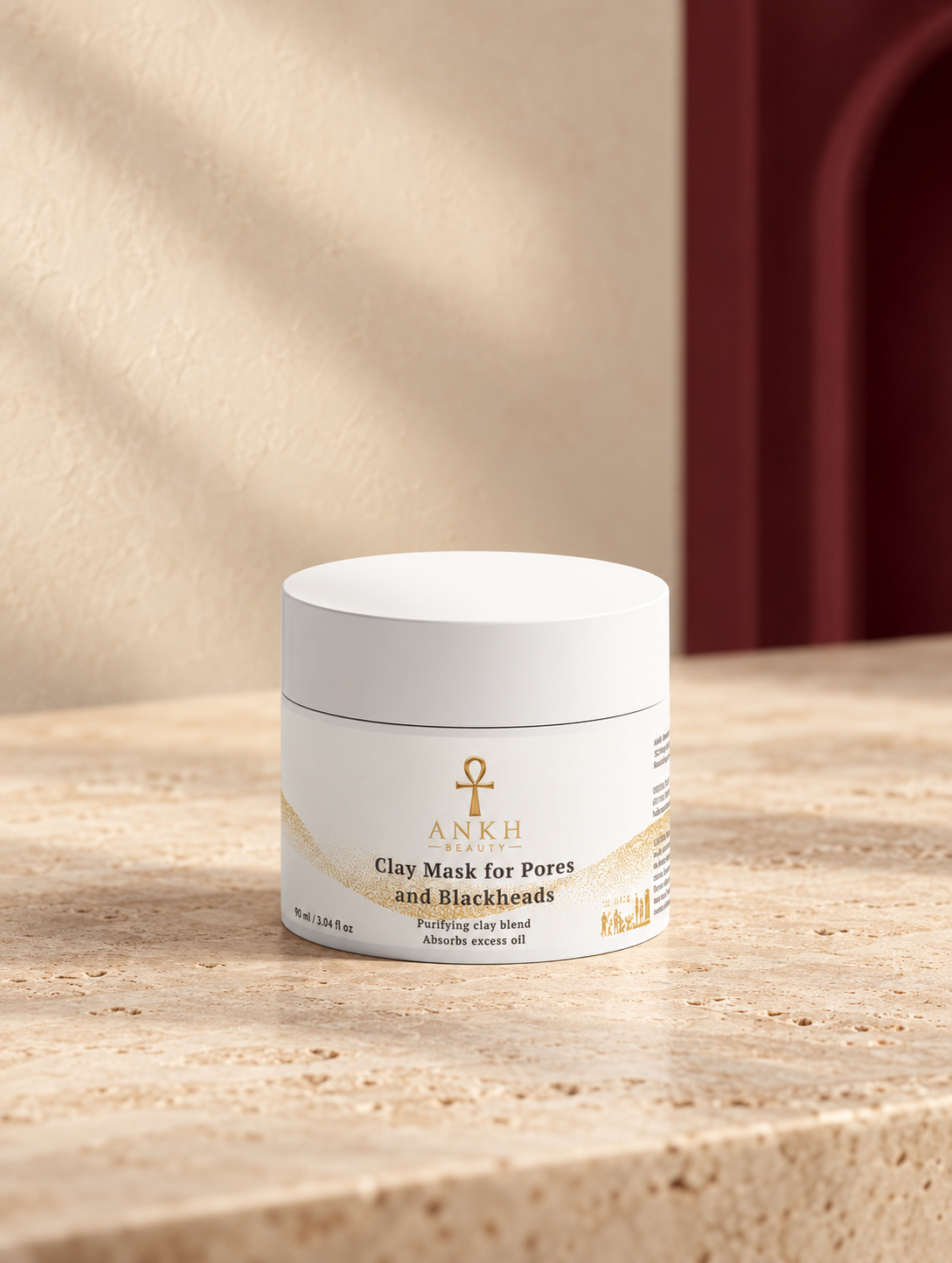
Choose the clay mask when excess oil and a congested-feeling T-zone are your main concerns. Choose the AHA concentrate when dullness or rough-feeling surface texture is your priority. The mask is the oil-and-impurity-focused option; the lactic-acid concentrate is the more directly exfoliation-focused option.
Which should you choose?
- Clay Mask for Pores and Blackheads: Skin feels oily or your T-zone needs occasional clarifying care. Why: Kaolin, montmorillonite and charcoal help lift excess oil and impurities.
- AHA Peeling Concentrate: Dull-looking skin or rough-feeling surface texture is your main concern. Why: Its 10% lactic-acid formula exfoliates surface dead skin cells to support smoother, more radiant-looking skin.
A real-life way to choose
A shiny nose with otherwise comfortable skin points toward targeted clay-mask care. A dull-looking complexion with rough-feeling texture points toward considering the AHA concentrate. Tight, irritated skin points toward pausing extra exfoliation and focusing on comfortable cleansing and moisture.
Choose one or use them together?
Start with the product that matches your main concern. Do not stack the mask and AHA concentrate in the same session unless your product directions or clinician specifically advise it. The mask also contains lactic acid; the two products overlap in exfoliating potential. Follow AHA sun precautions and use daytime sunscreen.
Choose by the kind of product you are looking for, then review the complete ingredients and individual packaging directions. Being in the same collection does not make these formulas interchangeable.
Clay mask vs. AHA concentrate at a glance
| Feature | Clay mask | AHA peeling concentrate |
|---|---|---|
| Format | Clay face mask | Concentrated exfoliating formula |
| Size | 90 ml / 3.04 fl oz | 30 ml / 1.01 fl oz |
| Featured ingredients | Kaolin, montmorillonite and charcoal powder | 10% lactic acid and 1% hyaluronic acid, as described on the product page |
| Lactic acid in the INCI list? | Yes; its percentage is not stated on the current product page | Yes; the product description states 10% |
| Where to check use instructions | Current clay-mask packaging | Current AHA-concentrate packaging |
| Choose it when | Excess oil and a congested-feeling T-zone are the main concern | Dullness and rough-feeling surface texture are the main concern |
| Why choose it | Clay and charcoal help lift excess oil and impurities | Lactic acid exfoliates surface dead skin cells to support smoother-looking skin |
What distinguishes the clay mask?
The mask’s ingredient list starts with aloe leaf juice, kaolin, glycerin and montmorillonite. It also includes diatomaceous earth, olive fruit oil, charcoal powder, tea, cucumber and sage extracts, and other ingredients listed on its product page.
Choose the clay mask when excess oil and a congested-feeling T-zone are your main concerns: the clay-and-charcoal formula helps lift oil and impurities. Its 90 ml size is three times the concentrate’s volume, but volume alone does not tell you how many applications either product provides. Application amounts and frequency depend on the individual directions.
What distinguishes the AHA peeling concentrate?
The concentrate’s ingredient list begins with water, lactic acid and pentylene glycol. It also lists glycerin, sodium hyaluronate, white tea extract and sage extract. The product description identifies 10% lactic acid and 1% hyaluronic acid.
Choose this formula when dullness or rough-feeling surface texture is your priority and you want a lactic-acid exfoliating step. A concentration statement describes this product; it does not establish how the clay mask compares in strength or how either formula will suit you.
Questions before you choose
Does the clay mask contain lactic acid too?
Yes. Lactic Acid appears in the mask’s INCI list. The current listing does not give its percentage, so you cannot use the concentrate’s 10% figure to describe the mask. Compare each complete formula rather than relying only on the product name.
Should I apply both together?
The collection and ritual recommendations are shopping guides, not instructions to combine these formulas in one application. Follow each product’s current packaging for application, frequency and precautions. If the directions do not answer your question, ask a product question before combining products.
Do I need to buy both?
You do not need every format in the collection. Start with the product type you intended to shop for and the products already in your routine. Check ingredients, size and directions before deciding whether an additional product fits.
Explore your options
Shop masks and exfoliants, build your custom ritual, or read the face wash and oil-to-milk cleanser comparison to review your cleansing options.
Explore these options: Clay Mask for Pores and Blackheads · AHA Peeling Concentrate.
General care guidance: the American Academy of Dermatology explains gentle exfoliation.